IPhone and iPad Apps Are Coming to the Mac Apple is already producing its own processors for the iPhone, iPad, and most of its non-Mac lineup (including the Apple TV, HomePod, and Apple Watch). These platforms run on ARM-based chips, commonly chosen for their superior battery life and thermals compared to the Intel chips in the Mac. Question: Q: Running iPad app on MacBook Pro I work in a school and many apps on my IPAD that I use with my students. Now that we are distance learning, I need to run my apps from my laptop on Zoom teletherapy. As a bonus, users will also be able to access a much larger library of apps. 'Mac users can for the first time run iOS and iPadOS apps on the Mac,' Apple CEO Tim Cook said. While the company didn't share a lot of details, Apple isn't talking about Catalyst, its own framework that makes it easier to port iOS apps to macOS.
Native Mac apps built with Mac Catalyst can share code with your iPad apps, and you can add more features just for Mac. In macOS Big Sur, you can create even more powerful versions of your apps and take advantage of every pixel on the screen by running them at native Mac resolution. Apps built with Mac Catalyst can now be fully controlled using just the keyboard, access more iOS frameworks, and take advantage of the all-new look of macOS Big Sur. There’s never been a better time to turn your iPad app into a powerful Mac app.
Designed for macOS Big Sur.
When an app built with Mac Catalyst runs on macOS Big Sur, it automatically adopts the new design. The new Maps and Messages apps were built with the latest version of Mac Catalyst.
Get a head start on your native Mac app.
Your iPad app can be made into an excellent Mac app. Now’s the perfect time to bring your app to life on Mac. The latest version of Xcode 12 is all you need. Begin by selecting the “Mac” checkbox in the project settings of your existing iPad app to create a native Mac app that you can enhance further. Your Mac and iPad apps share the same project and source code, making it easy to make changes in one place.
Optimize your interface for Mac.
Your newly created Mac app runs natively, utilizing the same frameworks, resources, and runtime environment as apps built just for Mac. Fundamental Mac desktop and windowing features are added, and touch controls are adapted to the keyboard and mouse. By default, your app will scale to match the iPad’s resolution. On macOS Big Sur, you can choose “Optimize interface for Mac” to use the Mac idiom, running your app using the native resolution on Mac. This gives you full control of every pixel on the screen and allows your app to adopt more controls specific to Mac, such as pull-down menus and checkboxes.
Even more powerful.
The new APIs and behaviors in macOS Big Sur let you create even more powerful Mac apps. Apps can now be fully controlled using just the keyboard. You can create out-of-window and detachable popovers, control window tabbing using new window APIs, and make it easier for users to select photos in your app by using the updated Photos picker. iOS Photos editing extensions can now be built to run on Mac. And your app is even easier to manage when it’s running in the background with improved app lifecycle APIs.
New and updated frameworks.
Run Mac App On Ipad 10.2
Mac Catalyst adds support for new and updated frameworks to extend what your apps can do on Mac. HomeKit support means home automation apps can run alongside the Home app on Mac. The addition of the ClassKit framework lets Mac apps track assignments and share progress with teachers and students. Plus, there are updates to many existing frameworks, including Accounts, Contacts, Core Audio, GameKit, MediaPlayer, PassKit, and StoreKit.
Tools and resources.
Download Xcode 12 and use these resources to build native Mac apps with Mac Catalyst.
- You can’t natively run iPad apps on a Mac computer without using an emulator, though that will change with a new generation of Macs, set to come out by the end of 2020.
- The new Macs will run on new Apple-designed chips that are similar to the ARM chips in iPadOS devices, making them compatible.
- Older Intel-based Macs can’t run iPad apps without an emulator, which isn’t easy to use and has many limitations.
If you want to run apps from your iPad on a Mac, the traditional answer is that you can't – at least not ordinarily. There is an exception — you can use an iPadOS emulator on your Mac. Read more about that below. But at this time, iPad apps are fundamentally incompatible with the architecture and operating system on a Mac computer. That is changing, though.
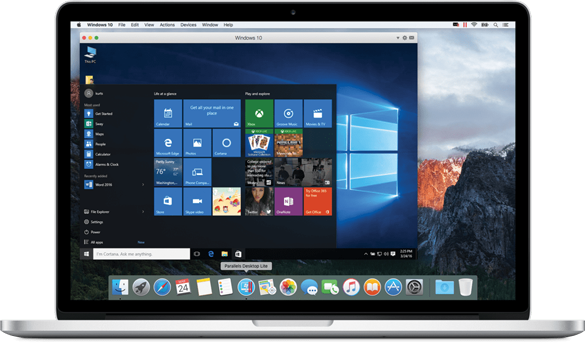
You'll be able to run iPad apps on some Macs soon
At the beginning of 2020, Apple announced that it would soon start to produce Mac computers with its own Apple-designed chipsets, abandoning the Intel chips it has used for many years. When it does this, the new Macs — which will share a similar architecture to iPadOS devices — will be able to run iPad apps.
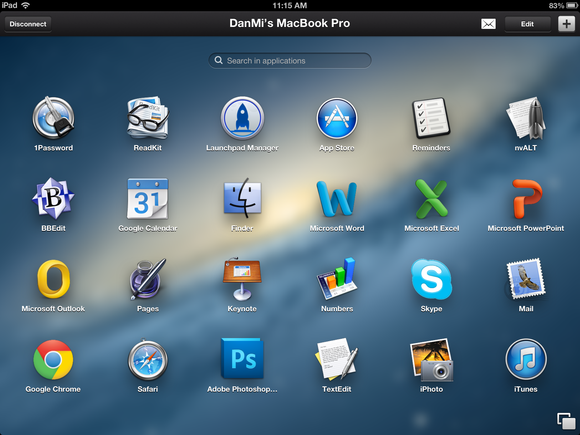
Apple has made its own ARM-based chips for iOS and iPadOS devices for years. ARM chipsets are characterized as low-power processors commonly found in mobile devices like phones, tablets, and some laptops, optimized to deliver the best battery life. Starting late in 2020, Apple is expecting to release MacBooks and other Mac computers with similar high-performance ARM chips.
Because of the similar architecture, Apple has already announced that this will allow Apple computers to natively run iPad apps with no further changes or modifications. You'll be able to install iPad apps directly from the Mac's app store.
© AppleThe exact timing is uncertain, but the first of these new Macs are expected before the end of 2020. Keep in mind that for quite some time to come, there will be both Intel chipset and Apple chipset Macs around, and only the ones with Apple chipsets will be able to run iPad apps. This might be a little confusing until most Intel-based Macs have been retired.
Running iPad apps with an emulator
The new Macs may be coming soon, but that's not the entire story. Because software developers need to be able to test iPadOS apps quickly and easily, they sometimes use emulator software to run iPad apps on their Macs.
There are a handful of emulators available for the Mac that can run iPad apps, but these programs are not easy to install or manage, and it's generally not possible to install apps from the Apple App Store – you're limited to just apps you developed yourself and have stored locally. One of the most common emulators to use is Xcode, which is a simulator offered by Apple.