We are really sorry that M4VGear doen't support macOS High Sierra or above now. Our developers are working hard to fix this problem and it needs to take some time. We would post the latest news about our pragram on our Facebook once we find solutions to fix the issue. Currently, if you only have a Mac computer with macOS High Sierra or above and couldn't find a Windows computer to use our Windows version, you can still try to install and run Mac OS X 10.12 or 10.11 on an external hard drive to make M4VGear work under old version of Mac OSX.
In the following guide, we would show you how to install and run MacOS X 10.12 from an external hard drive as an example.
Download the latest version of iTunes to the external hard drive; Downlad and install M4VGear for Mac for converting iTunes videos. It's worth noting that you should download the macOS Sierra installer in the App Store under “Previous buys“ or 'previous bought'. Make sure you click “Download” and let it save to your Mac’s hard drive.
What You’ll Need:
Mac Install App On External Drive Recovery Software
- An external storage device with a minimum capacity of at least 16 GB;
- A copy of the macOS Sierra installer.
- Download the latest version of iTunes to the external hard drive;
- Downlad and install M4VGear for Mac for converting iTunes videos.
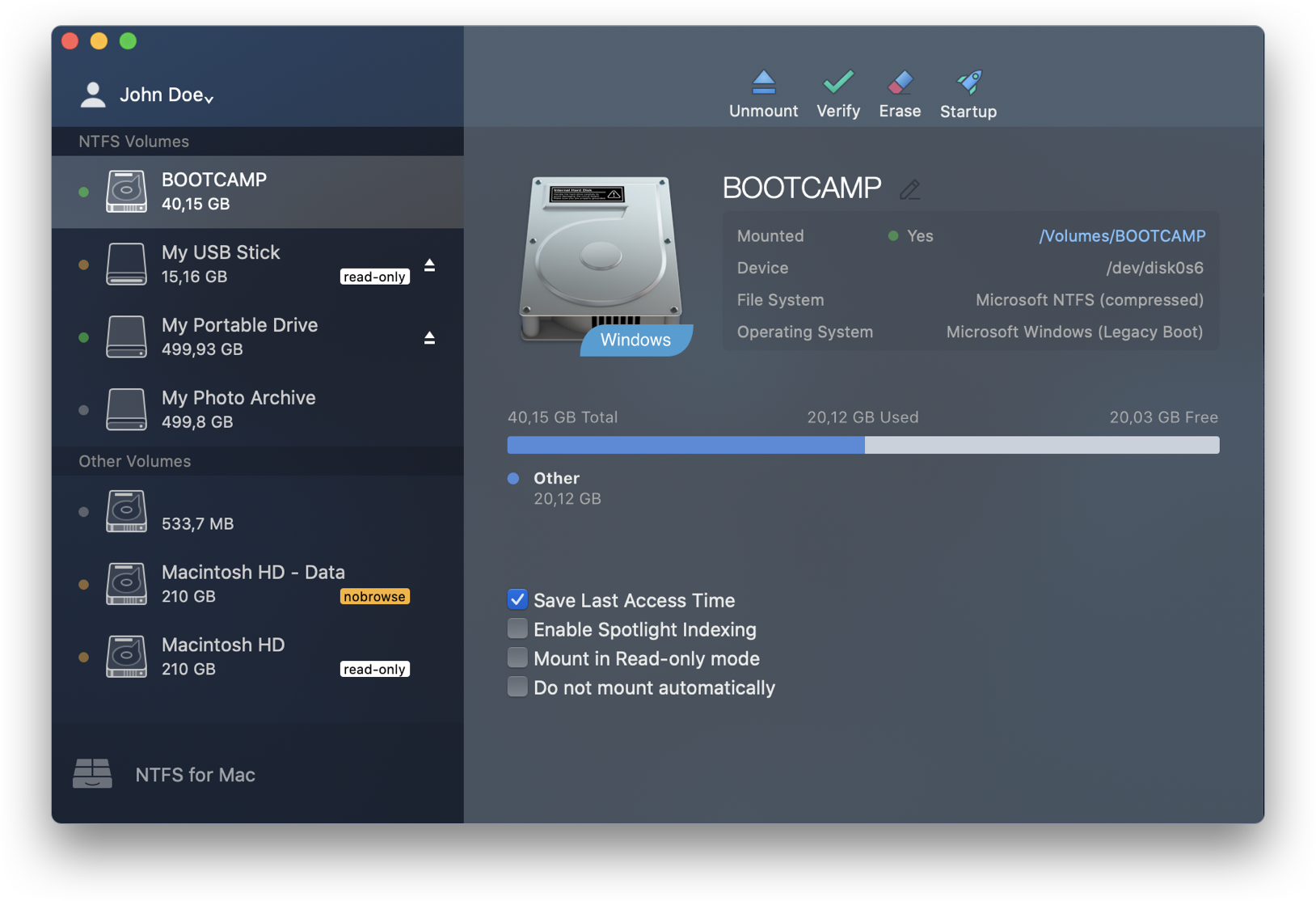
It's worth noting that you should download the macOS Sierra installer in the App Store under “Previous buys“ or 'previous bought'. Make sure you click “Download” and let it save to your Mac’s hard drive.
Important Tips: If you download and install macOS Sierra through other sources, your Mac might pop out a message that 'Downloading macOS Sierra the way in your Link is Not possible when your have High Sierra installed (because the file System)'. Under “Previous buys“ or 'previous bought' is a working Link where the Download is working ... You can check and install it in parallels successfully.
Step 1: Format External Hard Disk
In order for your external device to function as a startup disk, it must be formatted as Mac OS Extended and employ a GUID partition map. To check what format your drive is using (and change it), you’ll need to launch your Mac’s Disk Utility. Disk Utility can be found in the Applications > Utilities folder or by searching for it using Spotlight.
Once Disk Utility is running, click on your external device in the left-hand pane and check the partition map. In our case, our drive is partitioned using Master Boot Record rather than GUID. So, we definitely need to format it.
WARNING: Before proceeding, understand that formatting will obviously erase everything on your device. If there is anything you want to save, make sure you back it up first!

First, unmount the device.
Once the drive is unmounted, select the full disk in the left sidebar (labeled “UFD 3.0 Silicon” here)—not the sub-disk(s) under it (labeled “Untitled” here)—and click “Erase” in the top row of buttons.

From the resulting dialog, format your device as “Mac OS Extended (Journaled)” and use the scheme “GUID Partition Map”. You can also give your device an appropriate name, if you want. Then click “Erase”.
When the operation is complete, you will see the following message. Click “Done” to continue.
Step 2: Install macOS Sierra
When macOS Sierra is downloaded, it is saved in your Applications folder. Double-click the installer to begin.
Click “Continue” to proceed.
“Agree” to the software license agreement.
On the next screen, click “Show All Disks”.
Choose your newly formatted external device and click “Install”.
Enter your system password and hit Enter.
macOS Sierra will now begin installing on your external device. Feel free to grab a cup of coffee or take a shower, because it will take a few minutes.
Before macOS can complete installation, your computer will need to restart. Make sure you save any work and then click “Close Other Applications” to continue.
Once your Mac restarts, it will take about 15 more minutes to finish, and will then boot automatically from the new device.
You will then need to go through the usual macOS setup, including enabling Siri, setting up your time zone, and adding your user account.
Once you’re done with all that, you’ll have a brand new installation of macOS Sierra on your external device.
Make sure you don’t remove or eject your external device while you’re using it, since macOS will periodically need to access it.
How to Boot From Your External macOS Installation?
So let’s say you start having trouble with your internal drive, and want to troubleshoot it. Or maybe you want to use your portable macOS installation on another compatible Mac.
To boot from your external Sierra drive, plug it into the Mac in question, press the power button, and hold the “Option key until the recovery disk screen appears. From there, you can select your external drive and click the arrow to boot into it for that session.
You’ll boot into your macOS Sierra installation where you can use it as normal. The next time you restart that Mac, it will boot to main, internal hard drive as normal. (Or you can hold Option and boot to the external drive again, if needed.)
Now, you can install iTunes and M4VGear on your external hard drive and then smoothly convert iTunes videos as before.
By default, your Mac starts up from its built-in hard disk, but a startup disk can be any storage device that contains an operating system compatible with your Mac. For example, if you install macOS on an internal or external drive, your Mac can recognize that drive as a startup disk. You can then follow the steps in this article to start up from it.
Use Startup Disk preferences
When you use Startup Disk preferences to select a startup disk, your Mac starts up from that disk until you choose a different one.
- Choose Apple menu > System Preferences, then click Startup Disk.
- Click the lock and enter your administrator password.
- Select your startup disk, then restart your Mac.
If you see a message that your security settings do not allow this Mac to use an external startup disk, check the External Boot setting in Startup Security Utility.
Use Startup Manager
Install Mac App On External Drive
When you use Startup Manager to select a startup disk, your Mac starts up from that disk once, then returns to using the disk selected in Startup Disk preferences.
- Press and hold the Option (Alt) key immediately after turning on or restarting your Mac.
- Release the Option key when you see the Startup Manager window.
If your Mac is protected by a firmware password, you can release the key when you're asked to enter the password. - Select your startup disk, then click the arrow under its icon, or press Return.
If you press and hold the Control key during this step, your selection is saved in Startup Disk preferences, so it persists until you change it.
Install Windows On External Drive
If your Mac is using OS X Lion 10.7.3 or later, you can also use this method to start up from your Time Machine backup disk. Startup Manager identifies your Time Machine backup as ”EFI Boot.”
If you can't select your startup disk or start up from it
Best External Hard Drives For Mac
Check for these possibilities if you can't see your disk in Startup Disk preferences or Startup Manager, or your Mac won't start up from it.
Check for a compatible operating system on the startup disk
Make sure that your startup disk is using a version of macOS that is compatible with your Mac. If in doubt, use the same Mac to reinstall macOS on that disk.
To start up from an external disk with macOS Catalina 10.15 or later, the disk must connect via USB-A, USB-C, or Thunderbolt, not FireWire.
Check startup security settings
If you're using a Mac that has the Apple T2 Security Chip, check the settings in Startup Security Utility. These settings determine whether your Mac can start up from another disk.
Check for Option ROM firmware
Mac Install App On External Drive Mac
If you're in Startup Manager and can't see a third-party startup disk, the startup disk could be using Option ROM firmware. To enhance system security, Mac computers with up-to-date software don’t show devices that use Option ROM firmware until you load their firmware. To do that, press Option-Shift-Command-Period while in Startup Manager. If your startup disk appears, do that each time you want to start up from it or from another disk connected to it.
External Hard Drive For Mac
If you're using a firmware password, the ability to load Option ROM firmware is disabled as an additional security protection.