Apple began transitioning to 64-bit hardware and software technology for Mac over a decade ago, and all modern Macs now include powerful 64-bit processors that can run advanced 64-bit apps. These apps can access dramatically more memory, enable faster system performance, and take advantage of technologies that define today's Mac experience, such as Metal graphics acceleration.
Apple has been working with developers to transition their apps, and in 2018 Apple informed them that macOS Mojave would be the last version of macOS to run 32-bit apps.
Apple's transition to 64-bit technology is now complete. Starting with macOS Catalina, 32-bit apps are no longer compatible with macOS. If you have a 32-bit app, please check with the app developer for a 64-bit version.
Starting with mac OS Catalina 32-bit apps are no longer compatible with macOS. If you have a 32-bit app, please check with the app develper for a 64-bit version.' ME: So it is up to Adobe to update its acrobat reader to be compatable with Catalina but they have not!!!!! Apple's latest version of macOS, 10.15 Catalina, looks a lot like earlier versions of the operating system, but is vastly different under the hood.The biggest change is that Apple ripped out all the code that, in earlier versions, made it possible to run older 32-bit apps in Apple's 64-bit operating system. How to Run 32-Bit Apps in macOS Catalina. Apple's latest version of macOS, Catalina, officially ditches 32-bit app support, but you can still run the software you need by following these steps.
Opening 32-bit apps
When you attempt to open a 32-bit app, you will see an alert that the app needs to be updated to work with this version of macOS, or that the app is not optimized for your Mac and needs to be updated.
macOS Catalina
macOS Mojave and macOS High Sierra

If you haven't upgraded to macOS Catalina, you can still open and use the app, but you should check with the app developer for a 64-bit version that also works with the latest macOS.
How to find 32-bit apps on your Mac
System Information can find 32-bit apps that are installed on your Mac:
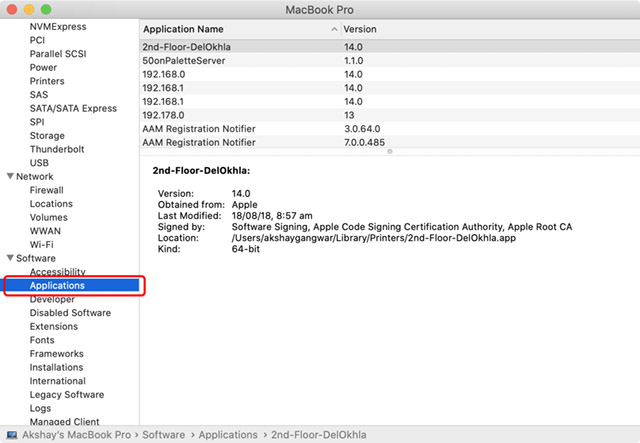
- Choose Apple menu > About This Mac, then click the System Report button.
- Select Legacy Software in the sidebar. All legacy software is 32-bit.
- If you don't see Legacy Software in the sidebar, select Applications in the sidebar, then check the list of apps on the right. The column labeled ”64-Bit (Intel)” shows ”No” for apps that are 32-bit.
When upgrading to macOS Catalina, the installer shows a list of recently used apps that are 32-bit. You can review this list before choosing whether to cancel or continue the installation:
macOS Catalina also shows a prohibitory symbol over the icon of each 32-bit app in the Finder, letting you know that the app will not open.
How to contact the app developer
The developer (or vendor) is the person or company that made the app. The easiest way to find contact information for an app's developer is to search the web for their name or the name of their app. Learn more about contacting third-party vendors.
To find the name of the developer:
- Select the app in the Finder.
- Choose File > Get Info from the menu bar.
- Look for copyright information in the Info window. For example, Apple is the developer of this app:
Macos Catalina What 32 Bit Apps Won't Working
When Apple launched macOS Mojave in 2018, it announced that it would be the last version of macOS that would support 32-bit applications. From Catalina onwards, you will no longer be able to run 2-bit apps and will have to upgrade to 64-bit versions or find alternatives.
What are 32-bit apps?
These applications date back to the days when computers ran on 32-bit processors and had 32-bit operating systems. While often described in terms of speed and power, the real difference between 32-bit and 64-bit whether it’s applications operating systems or CPUs, is the amount of memory they can address. 32-bit apps can only address 4GB of RAM, so that is the maximum amount of RAM they can use.
Why has Apple stopped supporting 32-bit apps
Apple has been using 64-bit processors in Macs for well over a decade and macOS has been 64-bit since Snow Leopard, so it was only a matter of time before the Mac became 64-bit only. That time is now. Apple believes that the apps most people use most of the time are 64-bit and those that haven’t made the leap have good 64-bit alternatives.
It has also provided plenty of warning. When you open a 32-bit app in Mojave or High Sierra for the first time, you are warned that it is 32-bit and that you should update it. That warning then appears again every month or so.
By dropping support for 32-bit apps, Apple can fully optimize macOS Catalina for 64-bit apps and focus its resources on supporting those.
Is my app 32-bit or 64-bit?
When you upgrade to Catalina, you’ll be shown a list of any 32-bit apps you have installed and that will no longer work. If you want to check before then, you have two options: one very easy and the other a little more complicated. We’ll start with the manual, more complicated method.
32 Bit Apps Catalina
- Click on the Apple logo at the top of the screen.
- Choose About this Mac.
- Select System Report at the bottom of the window.
- Click on Applications and scroll to the right until you see the column headed ’64-bit’.
- Apps that have a yes in the column are 64-bit and will work, those with a ‘No’ are 32-bit and won’t work.
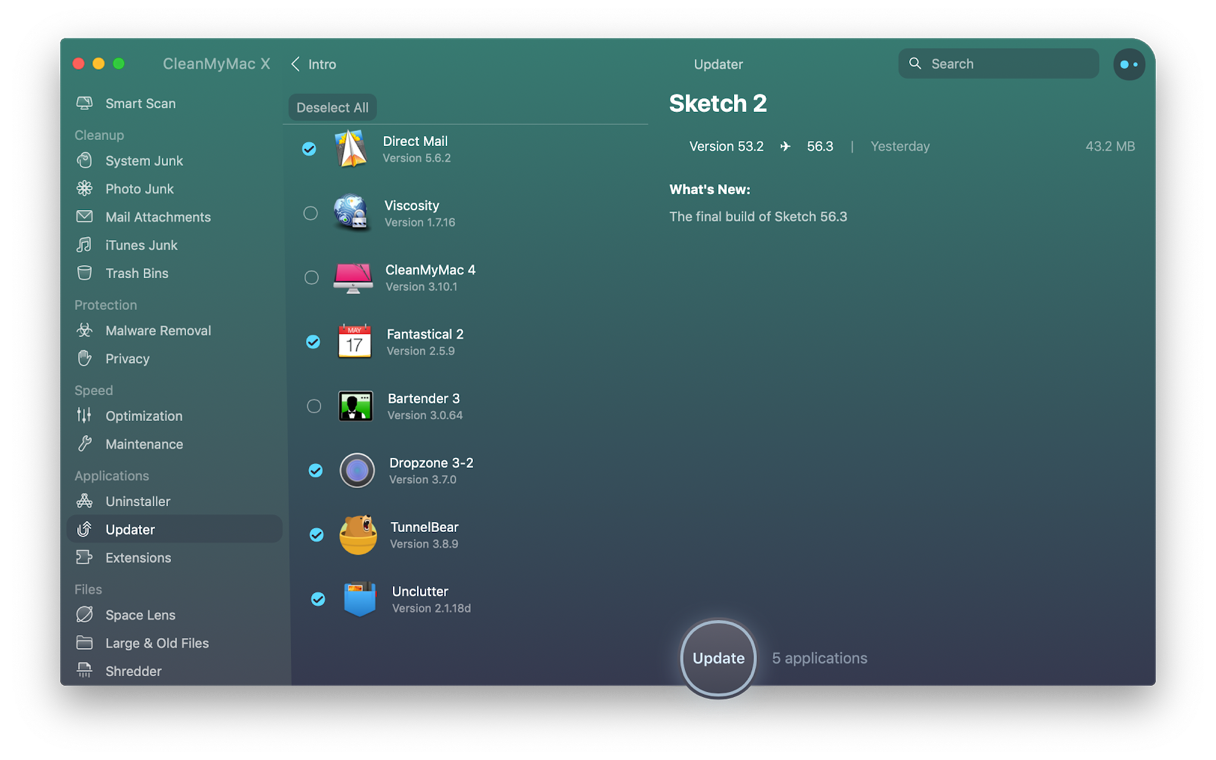
There is an easier way to check, and it’s the one I recommend because it will allow you to upgrade 32-bit apps to their 64-bit versions at the press of a button. It uses the Updater utility in CleanMyMac X — a cool program by MacPaw — and it’s so simple to use. Here’s how:
- Install, and launch CleanMyMac X — it’s free to download
- In the app, click on the Uninstaller tab
Now, press the “32-bit” tag in the sidebar on the left
You will see the list of your apps that will not be supported on Catalina. Some of them may already have 64-bit versions available. So instead of updating each app separately and wasting time browsing, just put the cursor on the tab below called “Updater”
Check the box next to each of the apps and press Update. The most recent versions of all the apps displayed will be installed, including 64-bit versions where they’re available.
How can I keep running 32-bit apps on macOS Catalina?
If you have 32-bit apps that you depend on and absolutely can’t use another app, and there is no 64-bit version available, you have three options.
- Don’t upgrade to Catalina. If you carry on using Mojave, or whatever version of macOS you’re using, you will be able to keep using 32-bit apps. However, it’s unlikely that the developer of those apps will continue to update them once Catalina is launched, as fewer and fewer people will use them. For example, shortly after Apple announced Catalina, games developer Aspyr announced that it would no longer sell 32-bit games. You will also be missing out on all of the benefits of Catalina.
- Upgrade to Catalina on your main Mac but keep another Mac running an older version of macOS. This relies on you having more than one Mac, of course. But it does mean you can enjoy the new features in Catalina and still use your old 32-bit apps. However, the same thing applies as above: your 32-bit apps are unlikely to be supported and updated for long. That includes security and compatibility updates.
- Run Mojave in a virtual machine, such as VMWare Fusion.
What else is affected by dropping support for 32-bit?
Some media file formats won’t make the transition to 64-bit. Most of these were created using formats or codecs that rely on QuickTime 7, according to Apple. The QuickTime 7 framework is included in Mojave and its predecessors, but won’t be there in Catalina, so formats created with it won’t work. Apple has a full list of affected formats here.
That means some Final Cut Pro and Motion projects won’t be compatible. However, if you open a project with a 32-bit format, you will see a warning and will be able to convert the library to a 64-bit compatible format at the click of a button. You will also be able to convert Final Cut libraries at any time from the File menu by choosing Check Media for Compatibility. And you can convert files in Compressor.
Dropping support for 32-bit apps in macOS Catalina is part of a long transition from 32-bit to 64-bit that started with hardware and then with the OS in Snow Leopard. Apple has been supporting both for many years but has decided the time is now right to become a 64-bit only operating system. Fortunately, most apps have already migrated to 64-bit and you can update all your apps at once using CleanMyMac X’s Updater. For apps that don’t have a 64-bit version, you need to decide whether to find an alternative or not upgrade to Catalina.
These might also interest you: